Monday, September 16, 2013

Building Product and Infrastructure from Scratch

Original Hawaiian Chocolate Factory
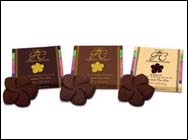


Pam and Bob Cooper moved to the Big Island of Hawaii in 1997 after Bob left a career in country club management in North Carolina.  Their philosophy was that bad things happen everywhere in life.  Where is a better place to experience the good and bad than in Hawaii?  Terrific point.  What happened next was a little less obvious.  With little experience in agriculture, the couple bought a small farm with coffee, macadamia nut and cacao trees in Keauhou, Hawaii (near Kona).  Originally, they had planned to cultivate the existing macadamia nuts and build a business; however a family member’s allergy to the product dampened the enthusiasm.  They turned to the cacao trees and in 1999 founded the Original Hawaiian Chocolate Factory.  Their first batch of chocolate was sold in 2000.    


In the last 14 years, the Coopers have grown OHCF to sell over 10,000 pounds of chocolate a year.  That is 5 tons of chocolate all made in small batches on site!  When they opened, few companies made chocolate in Hawaii and most used cacao from around the world.  The infrastructure for the chocolate industry did not exist in Hawaii. Attempts had been made, but there was little success. In fact, no testing facilities existed nearby to rate the beans, so the Coopers sent them to Spain.  They brought in the processing equipment from around the world.


As a specialty item, no retailers carried 100% Hawaiian chocolate.  (The only other company was Hawaiian Vintage Chocolate founded by Jim Walsh in 1986.)  The Coopers set up their distribution and retail sales network from scratch.  Several plantations grow cacao in Hawaii, but they do not process or manufacture the chocolate themselves.  In addition to their six acres of cacao, OHCF purchases cacao from over 30 local farms. The closest competitor is the Dole Plantation that grows 20 acres of cacao in Waialua, Hawaii (Oahu), which is processed and sold by Guittard Chocolate Company.  Currently, no other company has the entire chocolate making process from growing the beans to sales (“tree to bar”) in the country.  This was not by design, but necessity.  The process did not exist, so the Coopers had to make it.  Also, the company did not have a pool of experienced industry mentors on the island.  They worked with farmers and retailers to create a viable value chain in one place.  Thus, a lot of their initial work wasn't just making prototypes of a sellable product, but also included building the market.

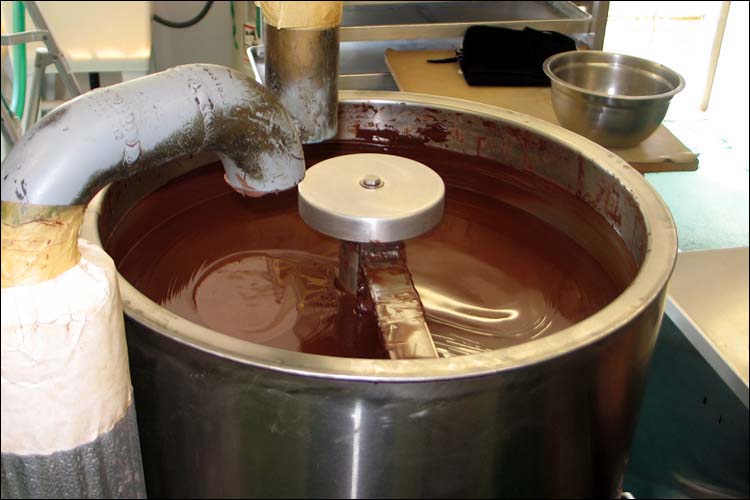

The company is a family affair.  Much of the harvesting and processing is still done by the Coopers.  Currently, OHCF sells only single-origin chocolate and cacao nibs.  They do not produce truffles or other chocolate items and do not sell wholesale. Unlike Dandelion Chocolate, OHCF does add cocoa butter, sugar, vanilla powder and/or milk powder to their cacao for taste and stability.  The final product is a smooth and consistent chocolate. 


www.ohcf.us

Friday, September 13, 2013

New crowdfunding page here

Crowdfunding is one of the latest buzzwords to hit mainstream America.  In the broadest sense, crowdfunding is a process by which people with ideas can get money (funding) from others (the crowd) to pursue those ideas.  More subtly, crowdfunding can a unique mechanism for sophisticated entrepreneurs to market their products.  However, crowdfunding is not for everyone. 


The new Crowdfunding page (tab above) of this blog is a three part article detailing the ins and outs of this phenomenon.  Part 1 of this article defines crowdfunding and discusses the participants involved.  Part 2 describes campaigns and their components used by innovators to solicit funding.  Part 3 discusses the advantages and disadvantages of crowdfunding and potential pitfalls. 

Sunday, September 8, 2013

From Technology to Tea

Onomea Tea

Rob Nunally and Mike Longo started Onomea Tea Company in 2003.  This was a second, if not third career for both of them.  Rob and Mike started Onomea Tea after realizing that their initial crop of choice, daylilies, would not grow as consistently as needed for cultivation.   Considering their options while drinking tea, they thought – “Why not grow tea?”  Having green thumbs and plenty of available property on Hawaii’s Big Island, they jumped in.  A new career was born.

Before Onomea, Rob lived in California.  He attended CA State University and received a BA in Business with an emphasis in Information System. This was perfect for Silicon Valley and he started in with a software support job and ultimately his own technology business. Since most of the technology was sold internationally, this business could be run from most anywhere.  In 2010 the political climate for the business changed and the business income dropped substantially, since that time he has been more focused on tea.

Mike was born and raised on the East Coast.  He grew up working in his father’s nursery and garden business and studied Biology and Chemistry at Marquette University.  After teaching high school biology, Mike’s path led him to the National College of Chiropractic and a career as a Chiropractic Physician and Natural Health Practitioner.  Mike lived in Fiji for a short time and eventually moved to Hawaii Island in 1977. He began hybridizing daylilies in the late 80's. In the mid 90's he moved to California and owned a retail nursery and a daylilies garden.  His interest in daylilies led to the creation of an online auction website for daylilies, which he still runs.


After a few years in California Mike began to feel the pull back to Hawaii. He convinced Rob to accompany him on a trip there. Rob became attached to the big island overnight. They began to look for a residence there in 1999. In a short time they discovered available land overlooking Onomea Bay that was breathtaking. They both packed up and moved to Hawaii in 2000 and began building their house. Their first tea plants were planted in 2003.

It has only been 10 years, but Rob and Mike are tea experts.  They have certifications galore and have trained with world renowned authorities.  Set on a nine acre plantation above Onomea Bay, Onomea Tea grows, cultivates, and processes some of the finest tea available.  Impressively, Onomea Tea is completely organic.  As Mike pointed out, tea isn’t washed before it is processed, so whatever is on when it is picked is on it when you drink it.  Pesticides – out, sea spray and Hawaiian sunshine – in.  Beautiful. 


The tea is picked and processed by hand on site.  They have been cultivating new hybrids of their tea plants after painstakingly selecting the best from their existing stock.  Currently, they produce and sell white, green, oolong, and black tea. Onomea does not add flavors and uses only their own crops. Recently, they produced an aged black tea “Koko Ki” that had subtle hints of cocoa.  (Yes – with no additives or flavorings they brought tea and chocolate together in one luscious cup.) Unfortunately, the demand is so high that they often sell out quickly. 

This second career seems to be working out quite nicely. 

If you are on the Big Island, contact them for a tour of the plantation and afternoon tea tasting!  You won’t regret it.


Sunday, September 1, 2013

Second or Third Career as an Entrepreneur

Entrepreneurship often occurs when someone is dissatisfied, and people are not satisfied with a lot of things.  Noticeably, we use products that don’t do what we need them to do, we work at jobs that are not fulfilling, we endure poor service both at home and work.  In my recent adventures talking with entrepreneurs and small business owners, I have talked with many people who started their companies after leaving other, often successful, careers.  The next series of entries focuses on these companies. 

Wednesday, July 24, 2013

What Not to Wear

There seems to be a few interesting myths floating around about start-up styles.  I was reminded of this at a pitchfest recently.  Pitchfests are short events, usually a couple of hours, at which about a dozen companies have three to ten minutes each to convince the audience and sometimes judges that their companies are wonderful businesses and that they should be funded.  Pitchfests can be terrific for refining your story or connecting with potential investors, mentors, and customers.  There are very few opportunities where a company founder can talk to a room full of people who actually want to hear about the idea.  However, before a word comes out, you better believe that an impression has already been made.  Many people forget that clothing and body language speak volumes.  No, you don’t have to be the best dressed or have the perfect stage presence, but you do have to look like you care.  Here are a few tips about what not to wear.

1.   Backwards baseball hat, or any hat for that matter.  Even in Silicon Valley, a backwards baseball hat is sure to make audience members snicker and roll their eyes.  It doesn’t matter if it has the company’s name on it, it doesn’t look good.  It is very difficult to listen to a CEO when you are wondering if they just woke up.  And if someone can’t wake up in time for a mid-afternoon presentation, how do they run a company?

2. Sweatpants.  ‘nough said.

3. The hoodie.  That is so 2007.  Do you really expect us to believe that you are the next Facebook?  Even if you are, we don’t care. 

4. Sunglasses.  See hat.

5. College paraphernalia.  I love my alma mater, but wearing my favorite college sweatshirt to talk with investors is a flag of insecurity.  “Really, I went to this school and you should be impressed.”  Or not.  Save this one for grocery shopping. 

6. Haute couture or expensive designer wear.  If you are talking to potential investors you are asking for money.  You are asking for money to pay your salary.  Why should they pay you to wear better clothing than most actors unless you are starting a fashion company? 

7. Gum.  Warning.  Don’t sit in the first row. You may get hit by projectile gum during the presentation.  It happens. 

8. Shorts or skinny jeans.  Whoa nelly.  This distraction just makes one wonder which season it is. Is this pitch for a resort?  Leg hair removal?  Liposuction?  Plus, not many people can wear these and look professional. 

9. Gimmicks. It is one thing to dress in clothes that reflect the nature of the market in which you do business.  There is a fine line between looking cute and looking stupid.  Even if your app is the must have for skateboarders, dressing like Hawk or White mid-tre flip is not going to show others that you can run a company.  Just don’t go there. 

10. Goggles – No, I am not kidding.  And it wasn’t even a gimmick. 

11. Dirt.  Unconsciously, people connect cleanliness and competence.  This means, don’t eat spaghetti before talking with others.  Since I am prone to spills, I shy away from wearing white.  It is sure to end poorly. 

12. Like any teenager you know, even if you are a teenager.  You are not, nor will you ever be, the coolest person in the room.  Stop trying to be.   

And last, but certainly not least…

13. Smug smile.  Why are you here?

As in any situation, it is your job to convince the audience of your story.  Part of this is how you dress. If you were trusting a stranger with thousands, if not millions, of dollars, how would you want them to look?  Be respectful.  
   

Tuesday, July 16, 2013

On the road again

This last week, my husband and I took a road trip from San Jose to San Diego for a business meeting.  Before we left, I researched several young companies for consideration in this blog. A list of young companies (less than five years old) was created using web searches and local press.  My plan was to visit the companies during the road trip, meet with owners and managers, and gather information about their strategies for success.  This time, since a girl has to eat on the road, the list focused on bakeries.  All in the name of research.

What surprised me most wasn’t the fantastic companies that will be discussed in future entries.  It was actually the companies that were taken off the list.  Let me clarify something here. I don’t get paid to visit companies or write about them.  The products sampled are usually purchased by me, unless I happen to be on the factory floor and sampling is part of a tour or something.  Objectivity is paramount.  What you get here are my observations on what makes start-ups succeed and examples of potential weaknesses.   

For example, a bakery near San Diego has a recipe for success with a perfect location and a lot of foot traffic.  However, the product that I had was, quite honestly, inedible. (I am not one to throw away food, but I couldn’t finish that cupcake to save my life.)  Additionally, the menu was remarkably limited with very limited product on display, and the hours were short. On the one hand, just because a company exists doesn’t mean that it is successful.  On the other hand, there are many factors that I did not observe.   

Another bakery had a decent amount of press and a great website - two items in the plus column.  In contrast with the other bakery, the central coast had a huge range of products, um… if you like donuts.  Fun donuts of all flavors from traditional old fashioned to maple bacon logs - three items in the plus column.  But in no way, shape, or form does one appreciate flies on food.  Nope.  My co-pilot almost ran for the door.  Undaunted, I got a couple of things that looked the least likely to have been visited by airborne insects.  After missing lunch, I tried one of the donuts.  Unremarkable.  Ok – I liked the chocolate frosting, but the donut itself was just there.  We tried the other one.  Not even unremarkable.  As hungry as I was, I put away the pastries.  (In the end, they ended up in the trash.  Don’t tell my mom.)    
                                                                                                    
Just like our judgment of food, success is subjective.  The customers of the donut shop may love the crazy flavors and maybe I was there on an off day.  To the locals, this place may be hugely successful if it is revitalizing a neglected neighborhood or building community by bringing people together.  To the owners, it may be a success if it is not losing money.  To others, they may expect the next Dunkin or Krispie.  It is all relative.  So – your question for the week…  


What do you consider success?

Tuesday, July 2, 2013

The Upside of Managed Growth for a Start-Up

The upside of managed growth for a start-up

In a world where fast business growth is applauded, it is easy to forget that it is not the norm. Not that there is anything wrong with fast growth, but what about everyone else?  How many times have you seen companies that grow really fast and then fall flat?  I sometimes save magazine articles, add them to my stack of things to reread, only to find them years later when I am cleaning off my desk. (I know that I am not alone.) What is interesting is the number of companies mentioned that are no longer around. They had a great idea, but couldn’t survive.  There are many reasons for that, but business cessation is a whole other topic that could go on for some time. The obvious tortoise-hare analogy aside, there is something to be applauded about managed growth.  

You may have noticed that the previous blog posts here discuss entrepreneurs who have carefully managed the growth of their companies. Oscar from Landau Confections emphasizes innovation in both product and production, ensuring that the results are truly hand-crafted and original. Cristina from Kika’s Treats was given the opportunity to accelerate growth by mass producing her products, but didn’t want to compromise the quality.  Dandelion Chocolate’s business model specifically focuses on small batch chocolate, isolating the sources to bring out the individual flavors hidden in each harvest.  Robin at Bequet Caramels described her strategy as focusing, “on one niche and make the best product we possibly can in that niche.  We were often asked why we don’t make chocolates, too.  The answer has always been that our goal is to make the best caramel anyone has ever had (period).” 

These companies were chosen not because it is interesting to try new candy, but because each demonstrates a dedication to high-quality products.  Also, each company was given the opportunity to grow quickly, but the owners concentrated on the quality of the product, staying true to their existing customers, and continuing the practices that had succeeded for them. These owners decided early on what mattered to them in the creation and development of their companies.  Individually, they chose a strategy and stayed true to the course. 

Entrepreneurs are often faced with two extreme scenarios – too few options (such as early financing) and too many options (like an overwhelming number of potential suppliers).  Knowing ahead of time what you want your company to represent helps with both situations.  When you don’t have many options, your dedication to your strategy can help spur you to innovate new solutions.  When too many options exist, your knowledge of yourself and the company can help eliminate those choices that don’t align with your long term goals. This is not to say that sometimes compromises aren’t necessary.  However, knowing what you stand for makes decision making during these situations much easier.   

On a side note - Public companies often don’t have the option to manage growth in these ways when shareholders and the SEC require the optimization of shareholder wealth (aka stock prices).  When your business centers on driving down costs to increase profit, it is hard to choose the more expensive route.  Some companies are expected to make compromises that detract from the initial goal since higher quality raw materials, labor intensive production, and higher ethical standards for sourcing often cost more.  When a company targets the mass market who is increasingly concerned about price, executives often believe that they do not have the option to increase prices to off-set higher production costs.  Few companies have been able to do this.  In fact, one of the critiques of the Western business environment is just that, too much emphasis on meeting the quarterly expectations so that the stock price doesn’t drop. 

In turn, costs are minimized to help maximize profit. 
And we buy it.

So, what is the right formula?  You decide.  Every dollar that you spend is your vote.

Get to know the products that you buy and who makes them.