Showing posts with label chocolate. Show all posts

Thursday, June 26, 2014

Types of Chocolate Firms

The first thing that you learn when you start looking into chocolate makers is just how many there are in this $100 Billion market (depending on who you talk to.  CNN reports $110B in 2014, IBIS estimates $120B, Markets and Markets estimate $98.3 B by 2016). I have found over 1000 companies involved in chocolate production by consolidating lists across several sources, and I am sure that there are many that are missing.  These firms are either manufacturers or chocolatiers.  The manufacturing firms are those that take beans from the market and produce chocolate for their own end products or for wholesale.  The chocolatiers use the premade chocolate as a base for their products such as truffles and flavored bars.  The following describes each in more detail.


THE MANUFACTURERS
Manufacturing firms take beans from the market (usually wholesalers and commodity markets, sometimes from actual farmers) and create various levels of chocolate for their own end products or wholesale to smaller chocolatiers. 

Although chocolate manufacturers start with the same raw ingredient - cacao- there is a wide spectrum of how this is done.  For a majority of the chocolate on the market, cacao beans are purchased on the commodity market through dealers.  The largest supplier of cacao is the Cote d'Ivorie.  There has been a movement recently where chocolate manufacturers (mostly smaller start-ups) are sourcing beans directly from farms.  These firms are referred to as "bean-to-bar".   Firms go directly to farms for a variety of reasons such as reducing likelihood of unethical practices such as human rights violations (child labor), obtaining better quality beans, and supporting sustainability practices.  (Please note that some just do it for the marketing rights.) 


Big incumbents and old faithfuls –
You know who they are. They are the prize of every child's Halloween basket, the makers of Easter bunnies, and the permanent fixture at the check-out of grocery stores.  They give you a break, melt in your mouth, and satisfy.  These firms are the mass market producers and dominate the market.  In fact, Mars, Mondelez (Kraft), and Nestle have 40% of the market with Hershey, Ferrero, and Meiji making up another 27% (www.icco.org/about-cocoa/chocolate-industry.html; www.forbes.com/sites/bethhoffman)

Subsidiaries –  
Over the last 50 years, there has been a huge consolidation in the chocolate manufacturing industry.  Some of the most contentious fights included the Kraft purchase of Cadbury in 2010 and Hershey's take-over of Scharffen Berger in 2005. 

Start-ups –
Since about 2009, the start-up chocolate scene has flourished.     Some describe this as the New American Chocolate Movement since there has been such a flood of companies entering the market.  But the increase has not been confined to the United States.  Check out the company list to see the new chocolate makers around the world.


THE CHOCOLATIERS
This may be surprising, but most companies outside of mass manufacturers and bean to bar firms don't make their own chocolate.  These firms are referred to as "Chocolatiers" who use chocolate made by other companies as a base, but innovate with flavors, textures, fillings, and combinations.  For example, the majority of chocolatiers in the Bay Area that I talked with source their chocolate from Guittard in Burlingame, CA. Some of the best known figures in the chocolate world are actually chocolatiers such as See’s, Russell Stover, Lulu’s and Whittman’s.


Thursday, June 19, 2014

Jennifer and the Chocolate Factory

Sometimes, I love my job.  As some of you know, I am working on a new research project about entrepreneurship and innovation in the chocolate industry.  I have learned so much already!  Many people that I have talked with requested that I post information about the types of chocolate companies out there and the choices for consumers.  So I am writing a series of posts that will describe the types of firms that exist or are being created, the choices that they face (suppliers, markets, etc … particularly entrepreneurs just starting out), and the products that reach consumers from these choices.  I am also making my list of firms available.  Since over 1000 chocolate makers exist, the list will be broken into tabs based on the location of the headquarters.  This is a work in progress and will be updated frequently based on the feedback I receive from you and any other digging that I do. So stay tuned. 

Thursday, February 13, 2014

Chocolate is back


What would you do to create the perfect product?  How about take 5 flights, canoe for 5 hours through the Amazon, and then trek 15 kilometers through the Bolivian jungle?  That is what it takes just to get the raw cacao for Oialla chocolate.  And we haven’t even started to discuss production yet.  And Rasmus Bo Bojesen, the owner of Oialla and chocolatier, will not settle for less.

This all started a few years ago when Rasmus’ wife asked him one morning why
they didn’t make organic chocolate.  This question didn’t come out of the blue.  Rasmus is a world-renowned chef and restaurateur who owns Axelborg and The Royal Danish Opera Restaurant.  (He has started several other restaurants throughout Denmark.)  His obsession with chocolate started over thirty years ago while working as a chef at Michelin star restaurants and as an apprentice to Lyon master-chocolatier Bernachon. Since then he has studied chocolate.  When I write studied, I mean that the man should have a doctorate in cacao if there were such a thing.  In addition to making and selling chocolate and delicacies in his restaurants and shops over the years, he started Bojesen Chocolate, which produced raw chocolate, in 2006.  And then he wrote a cookbook, “A Sense for Chocolate” that was published in 2009 (for which he won the Gourmand Best Chocolate Book in the World Award in 2012).  When he talks about chocolate, he beams as though nothing else in the world matters. 

So when his wife asked about making organic chocolate, Rasmus’ response was “Three reasons. Taste. Taste. And Taste.”  At that time organic cacao beans had a reputation for poor quality.  The supply of organic cacao was extremely limited and not consistent. But the couple was up for the challenge.  They talked with friends and colleagues, including an agriculture professor nearby that suggested that the cacao they were searching for may exist in the wild and only in the jungles of Bolivia.  After a lot of research, a small protected area was located that had virtually untouched cacao trees around Baures in the Beni region of Bolivia.  And they weren’t exporting the beans. 


This is where the 5 flights, 5 hours canoeing, and 15 km hike come in.  There was no assurance that Bolivia would have the quality of beans that Rasmus demanded.  In fact, he didn’t have proof that this raw material even existed. First, Rasmus met with locals who worked with Bolivian wild cacao harvesters. He then went to the sites to taste the beans and meet the workers.  He was surprised by what he found, an impressive bean with no acidity and bitterness that is usually associated with raw cacao.  He had found his bean.  And it doesn’t get more organic.  These trees have not been cultivated, fertilized, or treated with herbicides. The pods that are produced are about half the size of traditional pods, but hold much better flavor.  These are among the few beans that I have tasted that are not bitter.  They have a solid cacao flavor without the harsh aftertaste. 


Social entrepreneurship


When asked about gaining the trust of the Bolivian farmer, Rasmus shook his head.  “There are no farmers.  There are no farms.  This is the jungle.”  Trust was a big deal.  After working with the beans, he found that the fermenting and roasting process needed a small change.  However, this change flew in the face of what had been done by the locals for generations.  Thus, the relationship with the workers was critical to success. Additionally, the chocolate industry is notorious for the obscene use of child and slave labor. Since the location was deep in the jungle, it would have been easy for a company to come in and exploit those who live there.  Oialla now works with the Danish Foreign Ministry to set and ensure high standards for working conditions. 

Innovation

Working with these beans has not been easy. As I mentioned earlier, the pods are smaller and the beans have a different flavor than traditional beans.  This cacao also has more cocoa butter.  Thus, the traditional ways of making chocolate did not work.  New recipes needed to be perfected before products were ready.  Initial products were launched in 2010 and in less than a year, Oialla won an award from the “Academy of Chocolate.”  Later in 2011, they won the Gold in Great Taste Awards.  In 2012, Rasmus was invited to a small conference with the most talented chocolate makers in the world.  Although impressed with Oialla, a colleague asked why he didn’t get the entire flavor from the bean.  Puzzled, Rasmus went back to the kitchen and spent almost a year refining the manufacturing process.  He says that he now understands what his colleague meant.  The 78% chocolate now has a fuller flavor that captures more of the nuances of the Beniano beans. 

The product

When I visited Oialla, I was offered a beautiful tray of chocolate to taste, first the solid wafers and then the truffles and nuts.  Bottom line - Oialla chocolate is so good that I actually felt guilty eating it.  There were so many wonderful choices.  Now, I wish that I had taken the whole plate, thrown it in my bag and ran out with the treasures.  I knew that you could buy the chocolate wafers, but now I find out that the truffles and other chocolates are not sold.  Cruel cruel world.


At first, Oialla was produced as 72% and 78% dark chocolates (percent of cacao solids).  They just started producing a 46% milk chocolate.  Although chocolate snobs often look down at the lighter versions of chocolate, this milk is for the connoisseur. Rasmus made a subtle, but genius change to the manufacturing process that takes this milk chocolate to another level. I can’t tell you the secret, but it is brilliant.    
  

Recipe for success: Passion

What does every entrepreneur need? Passion. Everywhere you turn, people who are talking about successful entrepreneurs talk about passion.  But, what is passion?  The dictionary uses synonyms such as intense, driving, overwhelming conviction, strong desire, and enthusiasm. 

Passion is what gets you through the unforeseen difficulties and challenges, and there always are some.  In talking with Rasmus, you can’t help but understand his need to make the best product that he can, whether it be gourmet meals or organic chocolate.  He is also witty and down to earth, breaking out the beautiful photo book that his wife produced after their last trip to Bolivia with their children. It is a terrific combination that has served him well.  We may very well find Rasmus’ photo under passion in the dictionary.


Monday, September 16, 2013

Building Product and Infrastructure from Scratch

Original Hawaiian Chocolate Factory


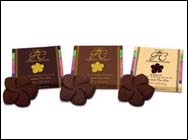
Pam and Bob Cooper moved to the Big Island of Hawaii in 1997 after Bob left a career in country club management in North Carolina.  Their philosophy was that bad things happen everywhere in life.  Where is a better place to experience the good and bad than in Hawaii?  Terrific point.  What happened next was a little less obvious.  With little experience in agriculture, the couple bought a small farm with coffee, macadamia nut and cacao trees in Keauhou, Hawaii (near Kona).  Originally, they had planned to cultivate the existing macadamia nuts and build a business; however a family member’s allergy to the product dampened the enthusiasm.  They turned to the cacao trees and in 1999 founded the Original Hawaiian Chocolate Factory.  Their first batch of chocolate was sold in 2000.    


In the last 14 years, the Coopers have grown OHCF to sell over 10,000 pounds of chocolate a year.  That is 5 tons of chocolate all made in small batches on site!  When they opened, few companies made chocolate in Hawaii and most used cacao from around the world.  The infrastructure for the chocolate industry did not exist in Hawaii. Attempts had been made, but there was little success. In fact, no testing facilities existed nearby to rate the beans, so the Coopers sent them to Spain.  They brought in the processing equipment from around the world.


As a specialty item, no retailers carried 100% Hawaiian chocolate.  (The only other company was Hawaiian Vintage Chocolate founded by Jim Walsh in 1986.)  The Coopers set up their distribution and retail sales network from scratch.  Several plantations grow cacao in Hawaii, but they do not process or manufacture the chocolate themselves.  In addition to their six acres of cacao, OHCF purchases cacao from over 30 local farms. The closest competitor is the Dole Plantation that grows 20 acres of cacao in Waialua, Hawaii (Oahu), which is processed and sold by Guittard Chocolate Company.  Currently, no other company has the entire chocolate making process from growing the beans to sales (“tree to bar”) in the country.  This was not by design, but necessity.  The process did not exist, so the Coopers had to make it.  Also, the company did not have a pool of experienced industry mentors on the island.  They worked with farmers and retailers to create a viable value chain in one place.  Thus, a lot of their initial work wasn't just making prototypes of a sellable product, but also included building the market.


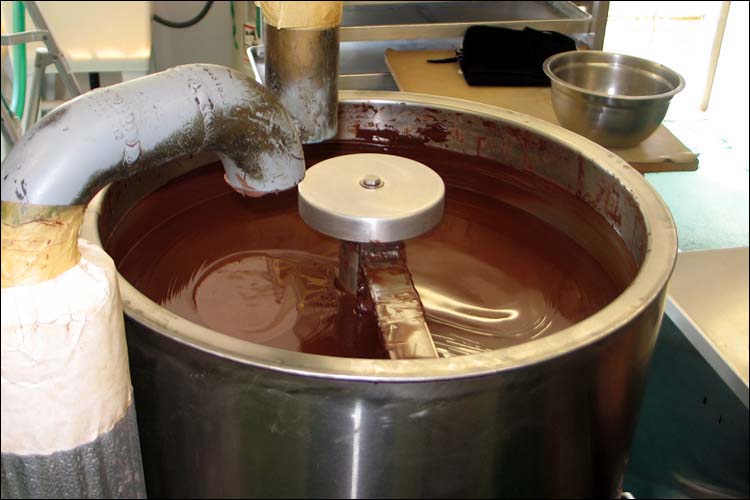
The company is a family affair.  Much of the harvesting and processing is still done by the Coopers.  Currently, OHCF sells only single-origin chocolate and cacao nibs.  They do not produce truffles or other chocolate items and do not sell wholesale. Unlike Dandelion Chocolate, OHCF does add cocoa butter, sugar, vanilla powder and/or milk powder to their cacao for taste and stability.  The final product is a smooth and consistent chocolate. 


www.ohcf.us

Friday, June 14, 2013

Cocoa + Sugar = Heaven (aka Dandelion Chocolate)

Cocoa + Sugar = Heaven (aka Dandelion Chocolate)
Simplicity really is best.

Dandelion Chocolate combines cocoa beans and sugar to produce bars of extraordinary character and complexity.

Simple and Pure.

And when I write cocoa beans and sugar, I mean ONLY cocoa beans and sugar.  No preservatives, stabilizers, or other unpronounceable additives.  That is what makes it so great.  I love the fact that their chocolate is so simple.  The founders, Todd and Cam, go old school on this recipe and it pays off.  In fact, in less than three years they have moved from their personal garage shop to their Mission District Factory and Café.  And just walking into their new café in the Mission District of San Francisco is ethereal.  You are hit with a wave of chocolate air that carries you past the chairs and tables to a small counter filled with rich pastries and luxurious beverages.  Three types of hot cocoa can’t be bad.


Let’s start with the chocolate.
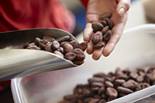
Everything about Dandelion Chocolate says quality and care.  The company purchases the raw cocoa beans directly from the farmer.  In many cases, team members have visited the farm and met the workers. They ensure that the farmers are getting a fair price for their beans and that the farms are up to Dandelion’s quality standards. Once back at the factory, they keep the beans from different farms separated because the flavor of the beans varies widely.  Todd explained that chocolate can differ for many reasons even within one farm. 
The beans are cleaned, roasted, and sorted in-house. Dandelion Chocolates are made in small batches, variant on the location and farm from which the beans originated. The labels reflect specific information about the origin and flavor of the chocolate, which is unique to each batch. Each bar is made by hand.


Just like wine, if you find a harvest that you love, buy a lot.  Unfortunately, the shelf-life of chocolate is not as long as wine, so you will just have to enjoy it.  (Darn.)

Recipe for success: perseverance
Obviously, this labor intensive process in difficult and expensive. As such, Dandelion Chocolate is one of the few bean-to-bar chocolate companies in the Bay Area.  The company was created by two friends, Todd Masonis and Cameron Ring, who founded and sold Plaxo, a personal online address book and forerunner to social networking in 2008. Afterwards, they decided to explore the world of chocolate.  They started by experimenting in a garage and building their own equipment when off-the-shelf wouldn’t work (so Silicon Valley).  A year later, they decided to make a company out of their experimentation.  Growth has been steady and they have learned a lot along the way.  When they opened their café last year, the incredibly fast growth was difficult to manage.  The owners did not have experience running a café.  When the WSJ ran an article near the holidays in 2012, sales skyrocketed.  They had just launched their café and basically sold out. 

The founders now balance economies of scale and their small product line.  For instance, large quantities of pre-printed labels are not feasible since batch sizes vary depending on the raw materials provided directly from the farmers.  Thus, they buy in bulk when feasible and then move production and finishing in house.  They also try to use sustainable materials from high quality sources.  For example, Dandelion has the wrappers made in India from recycled shirts!  The simple, elegant designs are perfectly fitting for the products. 

A recent development: the café invites local guest pastry chefs to transform the chocolate into decadent desserts.


Yum.
Dandelion Chocolate  740 Valencia Street SF CA 

Monday, June 10, 2013

Hey Honey Cakes... Kika's Treats

Kika’s Treats are yummy goodies that you won’t find anywhere else.  Seriously.  I had never heard of honey cakes before finding Kika’s, let alone chocolate covered Brazilian honey cakes.  For those of you still in the dark, Brazilian honey cakes are small, dense, slightly sweet pastries with a brownie-like consistency.  They are similar to a blondie, but without the chocolate chips.  Ok – now Kika’s covers these in chocolate. Viola.


As a caramel addict, I was skeptical at first, but my favorite Treats are the Crunchy Caramels.  They start with a traditional caramel recipe, but use coconut palm sugar and add puffed brown rice. Brown rice? Again – I was skeptical.  They are so good that they don’t even need the chocolate coating, (what am I saying – there is a definite cocoa protocol followed here). If that doesn’t intrigue you, then try the Caramelized Graham Crackers, also covered in chocolate.  They are made by hand in small batches and baked in a small oven in the shop.  


Recipe for Success: High Standards
Kika’s Treats was started by Cristina Arantes 2006.  Since then Cristina has grown the business organically in the Bay Area through specialty shops, gourmet stores, and online.  Although she has been approached to supply large chain stores, Cristina has been careful to manage growth without compromising quality.  This is incredibly important to her.  For a lot of companies, this is just PR, but she means it.  How do I know? While visiting her factory, I saw the defective products being set aside.  (And then I ate one. For the sake of research of course.)  I could not see or taste anything wrong. I was told that they are lopsided.  Who says quality control is dead? 

What is even more impressive is that the company donates 5% of proceeds to La Cocina – the non-profit San Francisco incubator specializing in the food industry.   
   

Find Kika’s Treats at Bi-Rite, Village Market, and other retailers.  Or go to kikastreats.com.

Monday, June 3, 2013

Innovation at Landru Chocolates

Landru Chocolates
Edible artistry.  Landru Chocolates masterfully creates beautiful collections of truffles, caramels, and pates de fruit that taste as good as they look.  A lot of chocolate out there is either beautiful or delicious.  Landru is both.  Founder Oscar Baile takes pride in making high quality confections that stand up against well-known competitors.  In fact, they have earned dozens of awards including the 2013 Best Flavored Chocolate Award at the SF International Chocolate Salon.  All of Landru products are hand-crafted in small batches, without rush.  As the rest of the world races to automate manufacturing, this company would rather take more time to ensure that their customers get the best products. 

Landru Chocolates continues to innovate with over 50 products including Cointreau chocolates, Salt-N-Pepper Toffee, and Balsamic-Rum Caramel Sauce!  And recently, they launched the Wine Pates de Fruits in Chardonnay, Merlot, White Zin, and Cabernet.  Adventure is here.

Started by Mr. Baile in 2004, Landru Chocolates is a small artisan chocolate company in Newark, California.  After spending fifteen years working as a civil and structural engineer in South America, Mr. Baile decided to start a company closer to home that would allow him to spend more time with his family.  He trained with Chocolatier Carlos Colmenares from Choco-Arte, C.A., Confectioner Terry Richardson, Chef Ewald Notter and Chef Webber Hitz.  The results – chocolates that you just have to try.


Thursday, May 30, 2013

Little known secrets - local entrepreneurs

What happened to all of the non-tech start-ups?

Recently, I wanted to create a new exercise for my Intro to Entrepreneurship class (Santa Clara University) that would explore local entrepreneurship in a similar space, but not the same firms seen over and over in the news.  With the bulk of entrepreneurship news focusing on tech start-ups and venture capital, I thought that this blog should take a look at the unsung heroes of the economy: the small, local entrepreneurs who are not developing the next app or software package.  Here, I bring you news of other ventures in interesting spaces.

Like chocolate.

As you may know, there has been a proliferation of chocolate shops in the last decades.  Many companies have entered the space and competition is hot.  

In the Bay Area, chocolate flows freely, but the quality range is huge.

First up - Dandelion Chocolate.  Started by the Plaxo founders in 2010.  Single-origin bars (70%) with two ingredients: cocoa and sugar.  As someone who is highly sensitive to the additives in mass produced chocolate, Dandelion is a treasure.

Next up ...